

American History Homeschool Curriculum
American History Homeschool Curriculum: A Thoughtful Guide for Teaching History at Home

Teaching American history at home gives families a unique opportunity to move beyond memorization and help children understand the people, ideas, and events that shaped the nation. Choosing the right American history homeschool curriculum can make the difference between history feeling dry and disconnected—or meaningful and alive.
For homeschooling families, American history is more than a required subject. It is a chance to explore stories, values, conflicts, and turning points that continue to influence modern life. With so many curriculum options available, understanding the different approaches can help parents choose a path that fits their child’s age, learning style, and family values.
What Is an American History Homeschool Curriculum?
An American history homeschool curriculum is a structured plan or set of resources designed to teach U.S. history in a home education setting. These curricula typically cover major periods such as:
- Indigenous cultures before European contact
- Colonization and early settlements
- The American Revolution
- Westward expansion
- The Civil War and Reconstruction
- Industrialization and immigration
- The World Wars
- Modern American history
Unlike traditional classroom programs, homeschool curricula often allow greater flexibility in pacing, depth, and teaching style.
Goals of Teaching American History at Home
Before choosing a curriculum, it helps to clarify the goals of teaching American history in a homeschool environment.
Most families want their children to:
- Understand historical events in context
- Learn cause-and-effect relationships
- Develop critical thinking skills
- Recognize multiple perspectives
- Connect history to modern society
Rather than simply memorizing dates and facts, a strong American history homeschool curriculum encourages children to think historically—asking why events happened and how they continue to matter today.
Common Approaches to American History Homeschool Curriculum
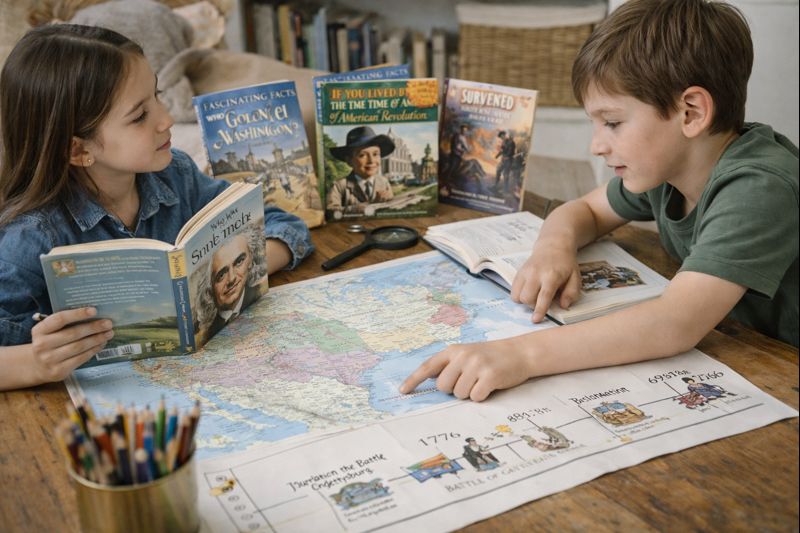
There is no single “right” way to teach American history. Homeschool families often choose from several different curriculum styles, depending on their preferences and priorities.
Textbook-Based American History Curriculum
Textbook-based programs are similar to those used in traditional schools. They typically include a student textbook, workbook, and teacher guide.
Pros:
- Clear structure and scope
- Easy to follow lesson plans
- Familiar format
Cons:
- Can feel impersonal
- Often focuses on surface-level facts
- Less emphasis on storytelling
This approach may work well for families who prefer a straightforward, organized plan with minimal preparation.
Literature-Based American History Homeschool Curriculum
Literature-based curricula use historical fiction, biographies, and narrative nonfiction to teach history through stories.
Instead of a single textbook, students read:
- Biographies of historical figures
- First-person accounts and diaries
- Well-written history narratives
Pros:
- History feels engaging and memorable
- Encourages reading and comprehension skills
- Provides emotional and cultural context
Cons:
- Requires more parent involvement
- Less scripted than textbook programs
This approach is especially popular among families who value deep understanding and meaningful discussion.
Timeline and Chronological Approaches
Some American history homeschool curricula emphasize a strict chronological timeline, helping children understand how events unfold over time.
This method often includes:
- Timelines
- Maps
- Primary source documents
Chronological learning helps children see connections between events rather than viewing history as isolated topics.
Unit Study Approach
Unit studies focus on specific themes or time periods, integrating multiple subjects into one cohesive study.
For example, a unit on the American Revolution might include:
- History readings
- Geography and map work
- Writing assignments
- Art or hands-on projects
This approach works well for families who enjoy hands-on learning and interdisciplinary studies.
Age Considerations for American History Homeschool Curriculum
Choosing the right curriculum also depends on a child’s developmental stage.
Elementary Level
At this stage, American history is often best taught through:
- Stories and biographies
- Read-alouds
- Gentle timelines
- Simple map work
The goal is to spark curiosity and build a basic understanding of the past.
Middle School Level
Middle school students can handle:
- More detailed narratives
- Discussions about cause and effect
- Exposure to multiple perspectives
This is a good time to introduce primary sources and encourage independent reading.
High School Level
High school American history often includes:
- In-depth analysis
- Essays and research papers
- Primary source documents
- Discussions of political, social, and economic themes
Curricula at this level may also prepare students for standardized testing or college-level expectations.
The Importance of Multiple Perspectives in American History
One of the strengths of homeschooling is the ability to explore history from multiple viewpoints. A well-rounded American history homeschool curriculum acknowledges that history is complex and often shaped by differing experiences.
This may include:
- Indigenous perspectives
- Voices of immigrants
- Experiences of enslaved people
- Regional differences
Exploring diverse perspectives helps children develop empathy and critical thinking skills.
Choosing the Right American History Homeschool Curriculum for Your Family

When evaluating curriculum options, consider the following questions:
- Do you prefer structured lessons or flexibility?
- Does your child learn best through reading, discussion, or hands-on activities?
- How much time can you realistically devote to history each week?
- What values and themes are important to your family?
The best curriculum is one that supports consistent learning while remaining sustainable for your household.
Blending Curriculum Styles for a Customized Approach
Many homeschooling families choose not to rely on a single American history homeschool curriculum. Instead, they blend resources to create a customized learning experience.
For example:
- A literature-based program for reading
- A timeline resource for structure
- Documentaries or primary sources for enrichment
This flexibility allows families to adapt as children grow and interests change.
Building Critical Thinking Through History
American history provides rich opportunities to teach critical thinking. Encouraging children to ask questions such as why, how, and what if helps them engage deeply with the material.
Discussion-based learning, narration, and reflection are often more effective than quizzes alone when it comes to developing historical understanding.
Final Thoughts on American History Homeschool Curriculum
Choosing an American history homeschool curriculum is about more than selecting a set of books or lesson plans. It is about deciding how your family will approach the study of the past—whether through stories, timelines, discussions, or a combination of methods.
When taught thoughtfully, American history helps children understand their world, think critically about ideas, and appreciate the complexity of human experience. With the flexibility homeschooling offers, families can create an American history education that is both meaningful and lasting.