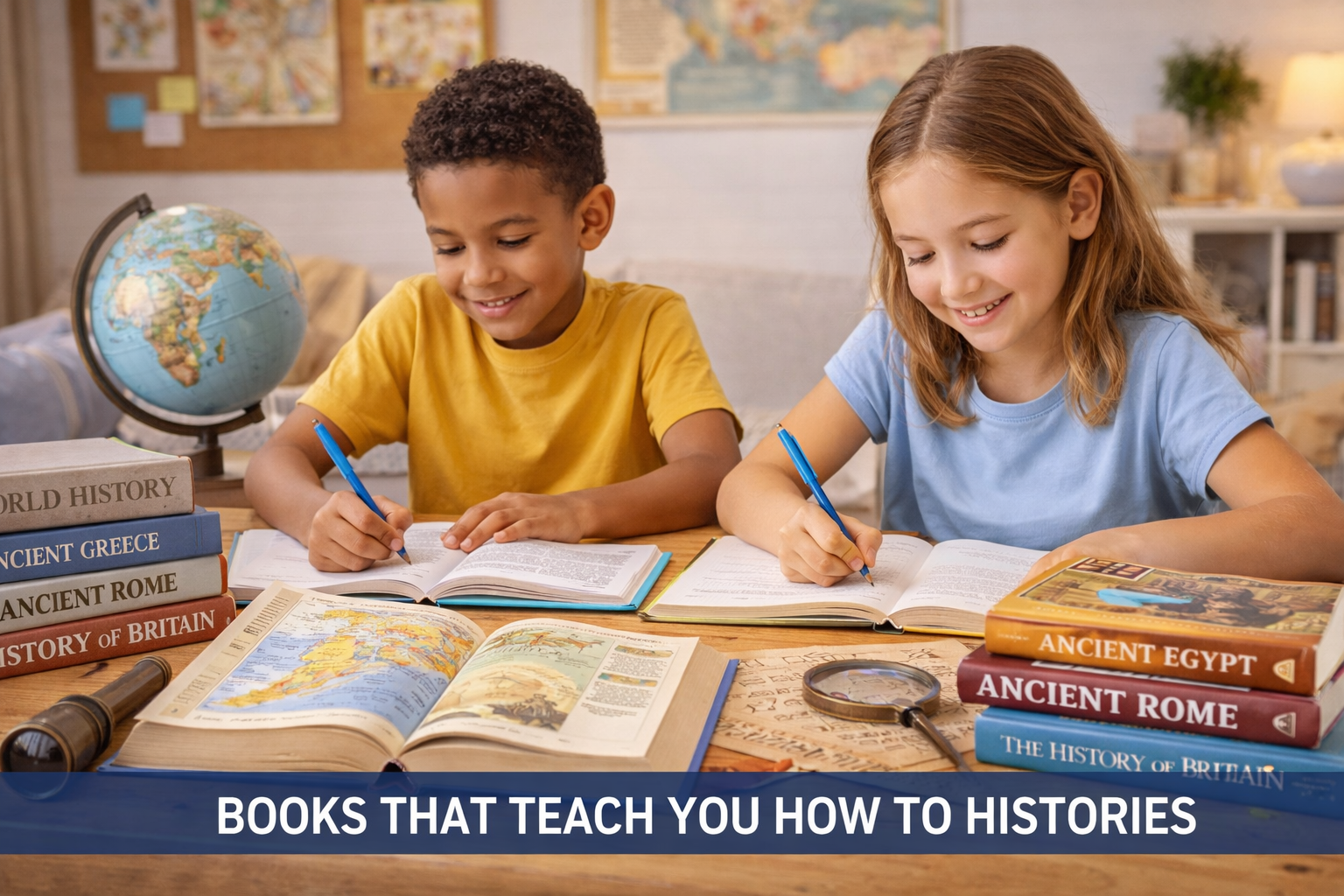
Books That Teach You How to Histories
Books That Teach You How to Understand History
I used to think history was just… information.
Dates. Events. Names I had to remember for a test and forget soon after.
It felt distant. Detached. Like something that had already happened and no longer mattered.
I didn’t see myself in it.
I didn’t feel connected to it.
And because of that, I never really understood it.
But that changed—not in a classroom, not through memorization—but through books.
Not textbooks. Not summaries.
Real books. Stories. Perspectives. Narratives that didn’t just tell me what happened, but helped me understand why it happened.
The First Real Shift
The first time history felt real to me wasn’t because I learned a new fact.
It was because I saw a moment through someone else’s eyes.
A decision that seemed obvious before suddenly became complicated. A situation that looked simple turned out to be layered with emotion, uncertainty, and pressure.
That’s when I realized:
History isn’t just about events.
It’s about people.
And people are never simple.
Beyond Dates and Facts
Before, I thought understanding history meant remembering details.
But books showed me something different.
Facts are important—but they’re only the surface.
What matters more is context.
Why did people act the way they did? What were they thinking? What options did they have? What pressures were they facing?
When you start asking those questions, history becomes something else entirely.
Not a list of events—but a series of human decisions.
The Power of Perspective
One of the most important lessons I learned from reading history is this:
There is never just one perspective.
Every event can be seen from multiple angles.
And depending on where you stand, the meaning can change completely.
Books helped me see that.
Not by telling me which perspective is “correct,” but by showing me different viewpoints.
And that made me more careful.
Less quick to judge. More willing to consider complexity.
Because history isn’t always clear.
Understanding, Not Just Knowing
There’s a difference between knowing something happened and understanding it.
You can know the outcome of an event without understanding the process that led to it.
Books fill that gap.
They slow things down.
They walk you through the sequence of decisions, the emotions involved, the uncertainty people faced in the moment.
And that makes a difference.
Because when you understand how something happened, it stays with you longer.
Seeing Patterns Across Time
The more I read, the more I started noticing patterns.
Not exact repetitions—but similarities.
Human behavior doesn’t change as much as we think.
Fear, ambition, conflict, cooperation—these appear again and again, in different forms, across different periods.
Books helped me see those patterns.
And once you see them, you start to understand the present differently.
Because history isn’t just about the past.
It’s a way of understanding the present.
History Becomes Personal
At some point, history stopped feeling distant.
It started to feel… connected.
Not because I lived through those events—but because I could understand the people involved.
Their doubts. Their decisions. Their struggles.
And that connection made history more meaningful.
Because it wasn’t just something that happened.
It was something that could have happened differently.
The Role of Storytelling
One of the reasons books are so powerful in teaching history is storytelling.
A well-told story brings events to life.
It gives structure. Emotion. Meaning.
Instead of isolated facts, you get a narrative.
A beginning. A middle. An end.
And that makes it easier to follow, easier to remember, and easier to understand.
Questioning What You Read
Another important lesson:
Not everything you read is complete.
Every book is written from a perspective.
Every author makes choices—what to include, what to emphasize, what to leave out.
Reading history taught me to question.
Not in a skeptical way—but in a thoughtful one.
What might be missing? What other perspectives exist? How might this story look from a different point of view?
That kind of thinking deepens your understanding.
Learning to Sit With Complexity
One of the most challenging parts of understanding history is accepting that it’s complex.
There are no simple answers.
No clear heroes or villains in many cases.
Just people making decisions in difficult situations.
Books helped me become more comfortable with that.
To sit with uncertainty. To accept that some questions don’t have easy answers.
And that’s an important skill—not just for history, but for life.
The Slow Nature of Understanding
Understanding history takes time.
You don’t read one book and suddenly “get it.”
It builds.
Each book adds something.
A new perspective. A deeper layer. A broader context.
And over time, those pieces come together.
Not perfectly—but meaningfully.
A Personal Reflection
Looking back, I don’t think I became interested in history because I tried to.
It happened naturally.
Through reading.
Through curiosity.
Through moments where something clicked—where an event made sense in a way it never had before.
And those moments kept me going.
Final Thoughts
If you want to understand history, don’t start with memorization.
Start with curiosity.
Read books that tell stories. That explore perspectives. That ask questions instead of just giving answers.
Take your time.
Reflect.
And allow yourself to see beyond the surface.
Because history isn’t just about what happened.
It’s about understanding why it happened—and what that means.
And once you begin to understand that, history stops being something distant.
It becomes something relevant.
Something alive.
Something that continues to shape the world—and the way you see it.