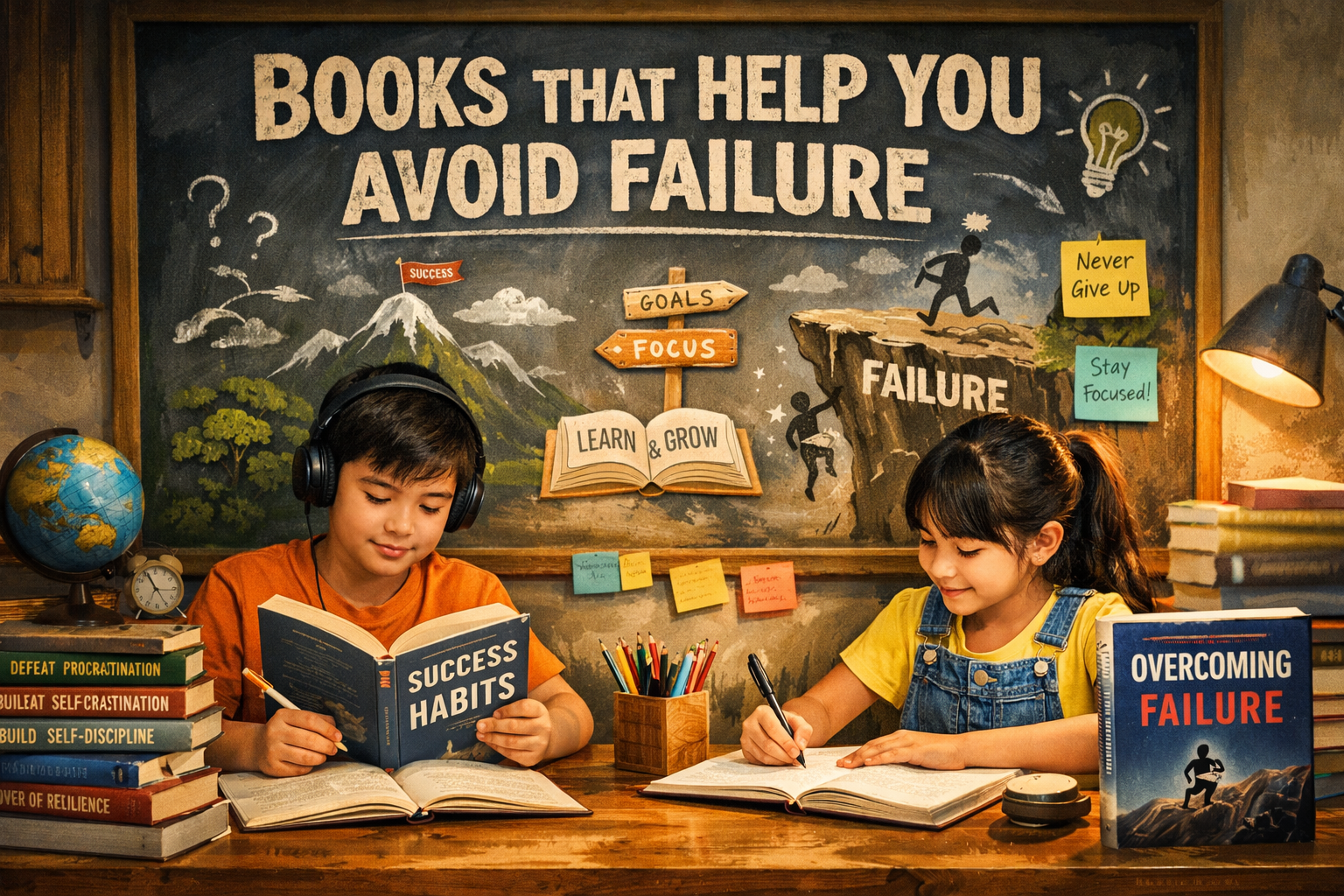
Books That Help You Avoid Failure
Books That Help You Avoid Failure
I used to think failure was something that happened suddenly.
A big mistake. A wrong decision. One moment that changes everything.
It felt dramatic.
Final.
Like a line you cross without realizing it—and once you’re there, there’s no going back.
But over time, I started seeing it differently.
Not because I experienced one big failure—but because I noticed something quieter.
Failure rarely happens all at once.
It builds.
The Small Steps You Don’t Notice
Most of the time, failure doesn’t come from one decision.
It comes from many small ones.
Things you ignore. Things you delay. Things you assume won’t matter.
Skipping a step. Avoiding a conversation. Choosing comfort over effort.
Individually, they seem insignificant.
But together, they create a pattern.
And that pattern leads somewhere.
Books helped me see that.
Not in a dramatic way—but in a way that made me more aware of those small moments.
The First Real Shift: Awareness Over Fear
Before, I thought the best way to avoid failure was to avoid risk.
Play it safe. Stay within what I know. Don’t take chances.
But that didn’t really work.
Because avoiding risk also meant avoiding growth.
Books introduced a different idea:
The goal is not to avoid failure completely.
It’s to understand it.
To recognize how it happens.
To see the patterns before they become problems.
That shift—from fear to awareness—changed everything.
Learning From Other People’s Mistakes
One of the most valuable things books offer is perspective.
You get to see how others think.
What they did right—and what they did wrong.
And more importantly, you get to understand why.
Before reading, I often learned things the hard way.
Through trial and error.
But books gave me access to experiences I didn’t have to go through myself.
And that saved time.
Not because I avoided all mistakes—but because I avoided some of the unnecessary ones.
Failure Is Often Predictable
This was surprising.
Many failures are not random.
They follow patterns.
Lack of preparation. Poor decisions under pressure. Ignoring warning signs.
Books that explore failure don’t just tell stories.
They break them down.
They show you the sequence.
And once you see the sequence, you start recognizing it in your own life.
The Role of Overconfidence
One of the most common causes of failure is overconfidence.
Thinking you know enough. That you don’t need to prepare more. That things will work out.
I’ve experienced that.
Moments where I felt certain—only to realize later that I had overlooked something important.
Books helped me see that overconfidence is subtle.
It doesn’t feel like a mistake at the time.
It feels like clarity.
And that’s what makes it dangerous.
Slowing Down Decisions
Another pattern I noticed:
Many mistakes happen when decisions are rushed.
Acting too quickly. Not thinking things through.
Books encouraged a different approach.
Not overthinking—but pausing.
Taking a moment to consider.
Asking:
What am I missing?
What could go wrong?
That small pause can prevent bigger problems.
Paying Attention to Warning Signs
Often, failure doesn’t appear suddenly.
There are signs.
Small ones.
Things that don’t feel quite right.
But it’s easy to ignore them.
Because they’re inconvenient. Because they don’t seem urgent.
Books helped me take those signs more seriously.
To pay attention earlier.
Because early awareness makes correction easier.
The Cost of Ignoring Feedback
Another lesson:
Feedback matters.
Not just positive feedback—but criticism.
Before, I avoided it.
It felt uncomfortable.
But books showed me that feedback is information.
It helps you see what you might be missing.
And ignoring it increases the risk of failure.
Failure as a Process, Not an Event
This idea stayed with me:
Failure is not an event.
It’s a process.
A series of actions, decisions, and patterns over time.
And if that’s true, then avoiding failure is also a process.
Not something you do once—but something you practice daily.
Building Better Systems
Books often emphasize systems.
Not just goals.
Because goals define what you want.
But systems define what you do.
And strong systems reduce the chance of failure.
They create consistency.
Structure.
A way to stay on track even when motivation is low.
The Importance of Reflection
One habit that helped me the most was reflection.
Looking back at decisions.
Not to criticize—but to understand.
What worked? What didn’t? What would I do differently?
Books encouraged this habit.
And over time, it improved my judgment.
Accepting That Failure Still Happens
Even with all this, failure doesn’t disappear.
You will still make mistakes.
Still choose wrong sometimes.
And that’s part of the process.
Books don’t promise perfection.
They offer awareness.
And awareness reduces unnecessary failure—but doesn’t eliminate it completely.
The Difference Between Avoidable and Necessary Failure
This was an important distinction.
Some failures are necessary.
They teach you things you can’t learn any other way.
Others are avoidable.
They come from patterns, neglect, or lack of awareness.
Books help you reduce the second type.
So when you do fail, it’s part of growth—not repetition.
A Personal Reflection
Looking back, I didn’t become someone who avoids failure completely.
But I became someone who notices more.
Who pauses more.
Who thinks more carefully before acting.
And that reduced the number of mistakes I made.
Not dramatically—but meaningfully.
Final Thoughts
If you want to avoid failure, books can help—but not by giving you a perfect plan.
They help you understand patterns.
They make you more aware of risks, decisions, and behaviors.
They teach you to think more carefully.
To act more intentionally.
And that awareness changes how you move forward.
So read.
Not to eliminate failure—
but to understand it.
Because once you understand how failure happens,
you begin to see it earlier.
And when you see it earlier,
you have a chance to change direction—
before it becomes something bigger.