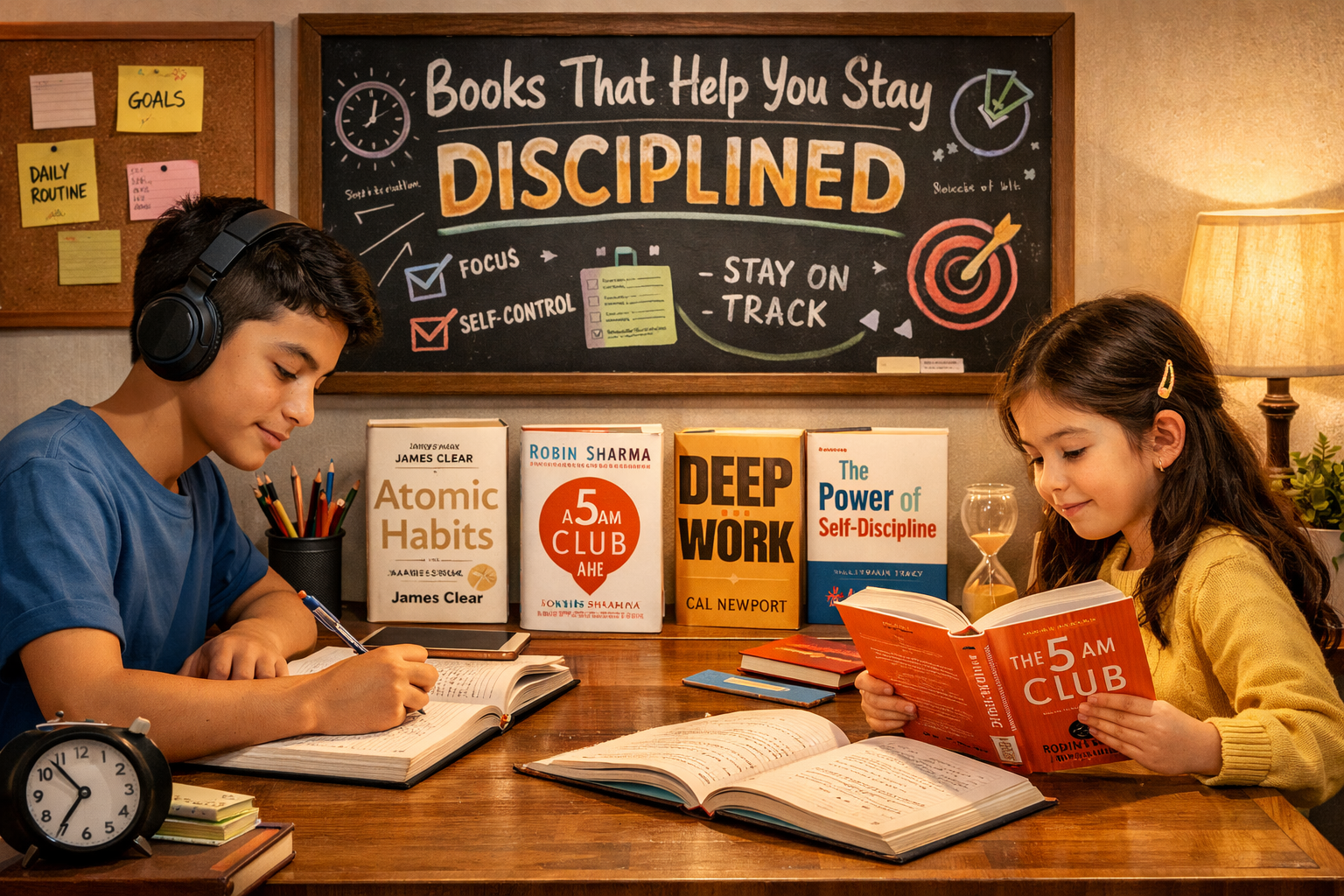
Books That Help You Stay Disciplined
Books That Help You Stay Disciplined
I used to think discipline was something harsh.
Something strict. Rigid. Almost uncomfortable.
The kind of thing that required forcing yourself to do what you didn’t want to do—over and over again.
And because of that, I avoided it.
I preferred freedom.
Doing things when I felt like it.
Following my mood instead of a structure.
At first, that felt right.
But over time, I started noticing something I couldn’t ignore.
Freedom without discipline doesn’t feel like freedom.
It feels like inconsistency.
The Problem I Didn’t See
I wasn’t lazy.
At least, not in the way I used to think.
I had goals. I had intentions.
I wanted to improve.
But my actions didn’t always match that.
I would start strong.
Then slow down.
Then stop.
Not because I didn’t care—
but because I relied too much on how I felt.
And feelings change.
Books helped me see that pattern.
Not in a way that judged me—but in a way that made me more aware.
The First Shift: Discipline Is Not Punishment
One of the first ideas that changed my perspective was simple:
Discipline is not punishment.
It’s support.
At first, that felt strange.
But the more I thought about it, the more it made sense.
Discipline is what keeps you moving when motivation fades.
It’s what creates stability.
Not restriction—but structure.
And structure gives you something to rely on.
Motivation Is Unreliable
Before, I depended on motivation.
If I felt like doing something, I did it.
If I didn’t, I waited.
But books showed me something clearly:
Motivation is temporary.
It comes and goes.
And if your actions depend on it, your progress will be inconsistent.
That realization changed how I approached things.
Discipline Begins With Small Decisions
I used to think discipline meant big actions.
Waking up early. Working for hours. Following strict routines.
But books introduced a different idea:
Discipline begins with small decisions.
Choosing to start.
Choosing to continue.
Choosing to return after stopping.
And those small decisions matter more than big efforts.
The Power of Showing Up
One idea appeared again and again:
Show up.
Even when you don’t feel like it.
Even when it’s inconvenient.
Even when it’s not perfect.
Because showing up builds discipline.
Not intensity.
Consistency.
Reducing Resistance
Before, I made things harder than they needed to be.
High expectations. Complex plans.
And that made it easier to quit.
Books helped me simplify.
Reduce resistance.
Make the starting point easier.
Because the easier it is to begin, the more likely you are to continue.
Discipline Without Pressure
I used to think discipline required pressure.
Strict rules. No flexibility.
But that approach didn’t last.
Books showed me a different way.
A more sustainable version.
Gentle discipline.
Consistent, but not rigid.
Structured, but not overwhelming.
The Role of Habits
Discipline and habits are connected.
The more something becomes a habit, the less discipline it requires.
At first, discipline is needed to start.
But over time, repetition takes over.
And actions become automatic.
When You Don’t Feel Like It
There are still days when I don’t feel like doing what I planned.
That hasn’t changed.
But my response has.
I don’t wait anymore.
I act anyway.
Even if it’s small.
Because discipline is not about feeling ready.
It’s about acting regardless.
Missing a Day Is Not Failure
One mistake I made before was thinking that missing a day meant failure.
And that mindset made it harder to continue.
Books helped me see it differently.
Missing once is normal.
Not returning is the problem.
So I focused on returning.
Identity Shapes Discipline
At some point, discipline becomes part of your identity.
You stop thinking:
“I need to be more disciplined.”
And start thinking:
“I’m someone who shows up.”
That shift makes a difference.
Because identity influences behavior.
The Importance of Environment
Your environment affects your discipline.
If your surroundings support your actions, everything feels easier.
If they don’t, everything feels harder.
Books encouraged small changes.
Making your environment work for you.
Discipline Creates Freedom
This was one of the most important lessons:
Discipline creates freedom.
Not restriction.
Because when you’re disciplined, you don’t rely on mood.
You have structure.
And that structure gives you control over your time.
Momentum Makes It Easier
Once you stay disciplined for a while, something changes.
Momentum builds.
And momentum reduces effort.
Because you’re no longer starting from zero.
A Personal Reflection
Looking back, I didn’t become disciplined overnight.
It happened gradually.
Through small actions.
Through consistent effort.
Through understanding what was holding me back.
And reading played a role in that.
Not by forcing me to change—
but by helping me see things differently.
Final Thoughts
If you want to stay disciplined, books can help—but they won’t do the work for you.
They will show you patterns.
Help you understand your behavior.
Give you tools to build consistency.
But the real change happens in your actions.
In showing up.
Again and again.
Even when it’s not easy.
So start small.
Keep it simple.
And focus on consistency—not perfection.
Because discipline is not about doing everything right.
It’s about doing what matters—
even when you don’t feel like it.
And over time, that builds something strong.
Something reliable.
Something you can depend on.
And that’s what discipline really is.