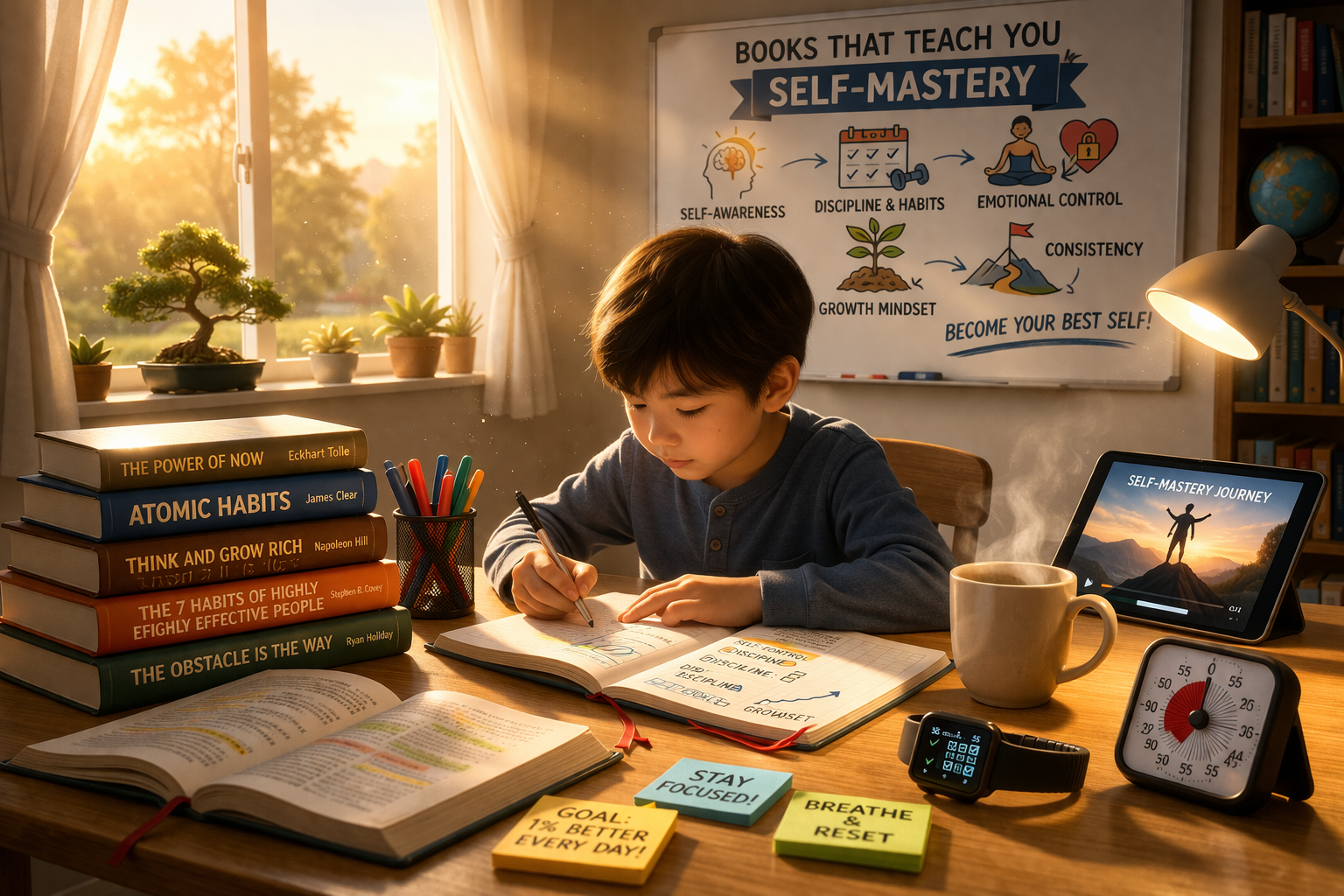
Books That Teach You Self-Mastery
Books That Teach You Self-Mastery
I used to think self-mastery was something distant.
Something reserved for people who had everything figured out.
People who seemed calm all the time. Focused. In control.
I didn’t see myself that way.
My thoughts felt scattered. My actions inconsistent. My reactions… sometimes automatic, sometimes unpredictable.
I wasn’t out of control—but I wasn’t fully in control either.
And for a long time, I accepted that as normal.
Until I started noticing something.
The Subtle Lack of Control
It wasn’t obvious.
There was no single moment where I thought, I need to master myself.
But there were patterns.
Reacting too quickly in conversations.
Getting distracted when I needed to focus.
Avoiding things I knew I should do.
Choosing what felt easy instead of what mattered.
Individually, they seemed small.
But together, they created something I couldn’t ignore:
A lack of control.
Not over everything—but over myself.
The First Realization: Self-Mastery Is Internal
One of the first ideas that changed my perspective was this:
Self-mastery is not about controlling the world around you.
It’s about understanding and guiding yourself.
At first, that felt simple.
But the more I thought about it, the more I realized how difficult it actually is.
Because the hardest thing to manage is not external circumstances.
It’s your own thoughts.
Your own impulses.
Your own reactions.
Awareness Comes First
Before you can change anything, you have to notice it.
Books helped me slow down enough to see patterns I had ignored.
How I reacted under pressure.
How I avoided discomfort.
How I made decisions based on emotion rather than intention.
That awareness didn’t fix everything.
But it created space.
And in that space, change became possible.
The Space Between Stimulus and Response
There’s a moment we often overlook.
The space between something happening—and how we respond to it.
Before, that space felt almost nonexistent.
Something happened—I reacted.
But reading introduced a pause.
A moment to think.
To choose.
And that small space is where self-mastery begins.
You Are Not Your First Reaction
One idea that stayed with me:
Your first reaction is not always your best one.
It’s often automatic.
Driven by habit, emotion, or past experience.
But you don’t have to act on it.
You can observe it.
Question it.
Choose something different.
And that changes everything.
Discipline Is Part of Self-Mastery
Self-mastery is not just about awareness.
It’s about action.
Doing what matters—even when it’s uncomfortable.
Before, I avoided discomfort.
But books helped me see that growth often requires it.
And self-mastery means choosing what matters over what feels easy.
Emotional Control Without Suppression
At first, I thought self-mastery meant controlling emotions completely.
Not feeling frustrated. Not feeling stressed.
But that’s not realistic.
Books showed me a better approach.
Not suppressing emotions—but understanding them.
Not reacting immediately—but responding thoughtfully.
And that makes emotions easier to manage.
The Role of Consistency
Self-mastery is not built in one moment.
It’s built through repetition.
Small choices.
Daily actions.
Consistent effort.
And over time, those actions shape your behavior.
Knowing Yourself
One of the most important parts of self-mastery is self-awareness.
Understanding your strengths.
Your weaknesses.
Your patterns.
Books helped me reflect.
To see myself more clearly.
And that clarity made change possible.
The Illusion of Control
There’s something else I learned along the way.
You can’t control everything.
Not other people.
Not every situation.
But you can control how you respond.
And focusing on that makes a difference.
When You Fail Yourself
There are moments when you don’t act the way you want to.
When you react instead of respond.
When you avoid instead of act.
And that’s part of the process.
Books didn’t promise perfection.
They emphasized progress.
Returning.
Learning from those moments instead of judging them.
Self-Mastery Is Quiet
It doesn’t always look impressive.
It’s not always visible.
Sometimes, it’s just choosing not to react.
Choosing to stay focused.
Choosing to continue when it’s difficult.
Small decisions.
Made consistently.
A Personal Reflection
Looking back, I didn’t achieve self-mastery.
Not completely.
But I became more aware.
More intentional.
More in control of how I respond.
And that made a difference.
Not dramatic—but meaningful.
Final Thoughts
If you want to develop self-mastery, books can guide you—but they won’t do the work for you.
They will help you understand yourself.
See your patterns.
Recognize your reactions.
But the real change happens in your actions.
In the moments where you choose differently.
So read.
Reflect.
And practice.
Because self-mastery is not about perfection.
It’s about progress.
About becoming a little more aware.
A little more intentional.
A little more in control—
one decision at a time.