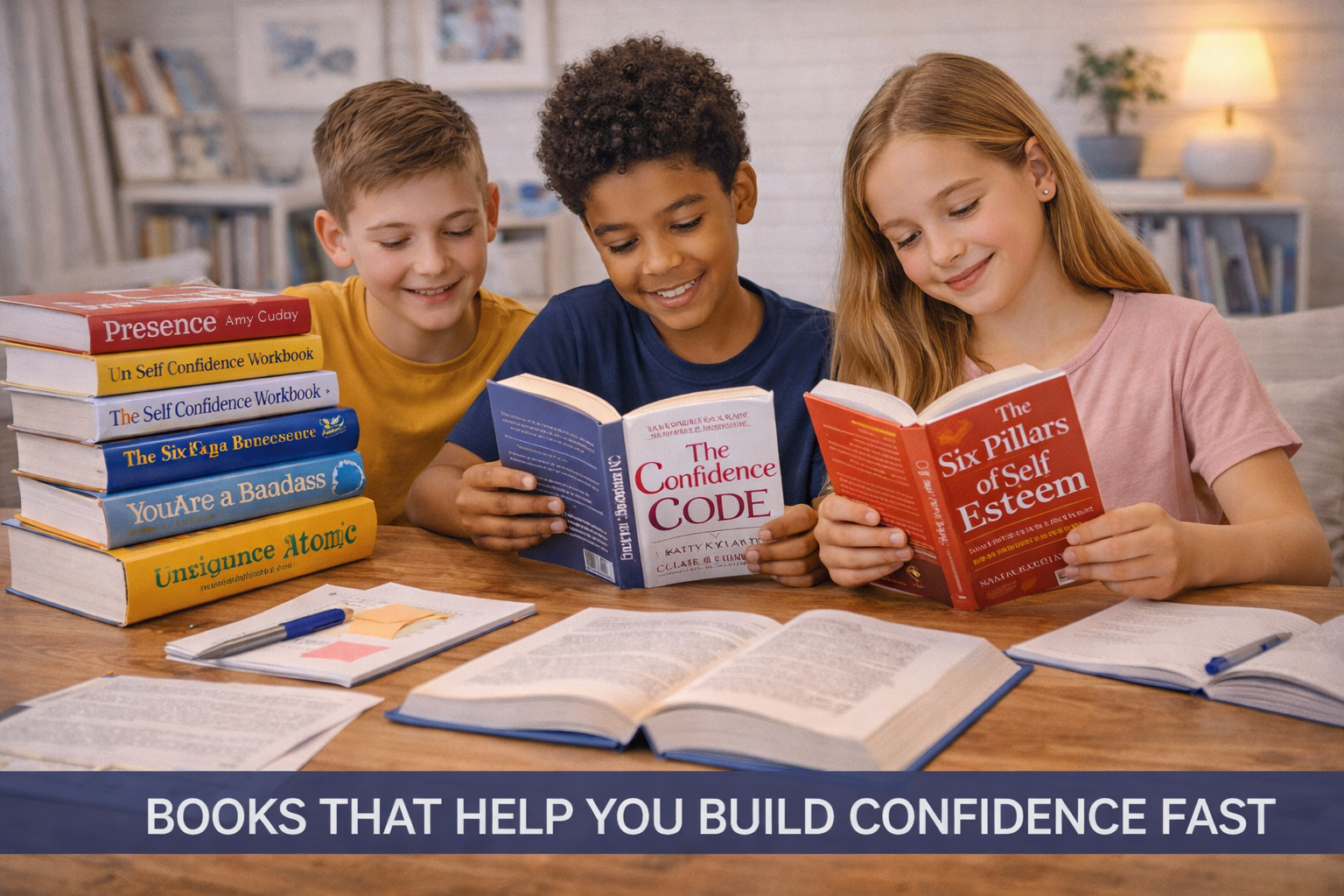
Books That Help You Build Confidence Fast
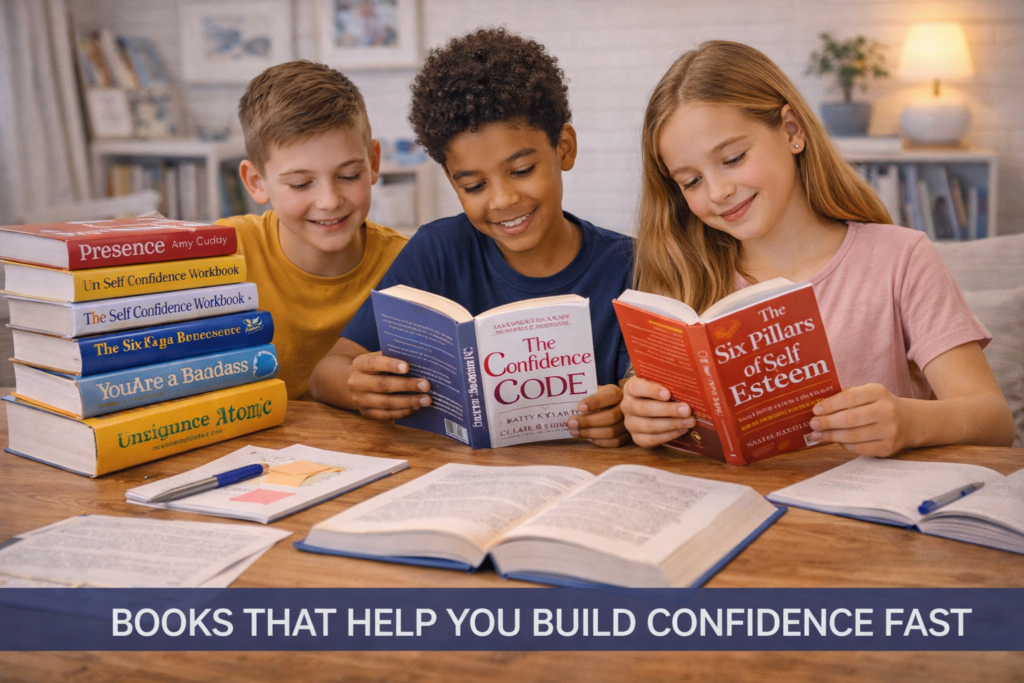
Books That Help You Build Confidence Fast
I used to think confidence had a certain look.
It looked like speaking without hesitation, walking into a room without second-guessing yourself, knowing exactly what to say at the right time.
And because I didn’t always feel that way, I assumed I wasn’t confident.
It felt like something I had to “become” before I could act.
But that belief kept me stuck.
Because if confidence comes first, and action comes after—then what do you do when confidence never shows up?
That question stayed with me longer than I expected.
And slowly, through reading, I started to see things differently.
The First Shift: Confidence Isn’t a Starting Point
The first idea that changed everything was simple:
Confidence is not a starting point.
It’s a result.
At first, I resisted that.
It felt easier to believe that confident people just are confident.
But books that focus on confidence often say the same thing in different ways:
Confidence comes from action.
From experience. From trying, failing, adjusting, and trying again.
Not from waiting.
And once I understood that, something shifted.
Because it meant I didn’t have to wait anymore.
Why “Fast” Doesn’t Mean Instant
The idea of building confidence fast can be misleading.
It doesn’t mean instant.
It means removing what slows you down.
Overthinking. Fear of judgment. The need to be perfect.
Books helped me identify those patterns.
And once you see them, you can start to move differently.
Faster—not because you rush, but because you stop hesitating as much.
Small Actions Create Momentum
One of the most consistent lessons across different books was this:
Start small.
Before, I thought confidence required big actions.
Speaking up in a large group. Taking major risks.
But that felt overwhelming.
Books showed me another approach.
Small actions.
Speaking once instead of staying silent. Trying something new in a low-pressure situation. Taking one step forward instead of waiting for the perfect moment.
And those small actions create momentum.
Which leads to more action.
Which builds confidence.
Changing the Way You Think About Failure
Fear of failure was one of the biggest things holding me back.
Not just failing—but how I would feel afterward.
How others would see me.
Books helped me reframe that.
Failure wasn’t something to avoid.
It was part of the process.
Not proof that you’re not capable—but proof that you’re trying.
And once I started seeing it that way, it lost some of its power.
The Role of Self-Talk
Another thing I didn’t notice at first was how I talked to myself.
The constant inner dialogue.
Doubt. Criticism. Hesitation.
Books that focus on confidence often bring attention to this.
Not in a dramatic way—but in a practical one.
If your internal voice is constantly negative, it affects how you act.
Changing that voice—slowly, intentionally—can make a difference.
Not overnight.
But over time.
You Don’t Need to Feel Ready
This was one of the hardest lessons to accept:
You don’t need to feel ready.
I used to wait for that feeling.
The moment when everything felt clear and certain.
But it rarely came.
Books helped me see that readiness is often a result of action—not a requirement for it.
You start.
And then you figure things out.
Exposure Builds Familiarity
Confidence often comes from familiarity.
The more you do something, the less intimidating it becomes.
Books encouraged exposure.
Not all at once—but gradually.
Putting yourself in situations that feel slightly uncomfortable.
And staying there long enough to realize that you can handle it.
That realization builds confidence.
The Difference Between Confidence and Perfection
I used to connect confidence with perfection.
Doing things without mistakes.
But that’s not realistic.
Books helped me separate the two.
Confidence isn’t about doing things perfectly.
It’s about being okay with not being perfect.
And still showing up.
Identity Matters
At some point, the focus shifts.
From what you do—to who you believe you are.
Instead of saying, “I’m trying to be confident,”
You start thinking, “I’m someone who tries.”
That identity shift matters.
Because it changes how you approach situations.
You’re no longer waiting to feel confident.
You’re acting in a way that builds it.
Books Don’t Give Confidence—They Guide You
This is important.
Books don’t give you confidence.
They guide you toward it.
They help you see your patterns. Understand your thoughts. Change your perspective.
But the action—that part is yours.
And that’s where real change happens.
When Progress Feels Slow
There are times when it feels like nothing is changing.
You try, but the feeling doesn’t come.
That’s normal.
Confidence builds gradually.
In small moments.
And sometimes, you don’t notice it until later.
When something that once felt difficult suddenly feels easier.
A Personal Reflection
Looking back, I didn’t become confident all at once.
There was no single moment where everything changed.
It happened slowly.
Through small actions. Through repeated effort. Through ideas that stayed with me and influenced how I thought.
And many of those ideas came from books.
Final Thoughts
If you want to build confidence fast, don’t look for shortcuts.
Look for clarity.
Understand what’s holding you back. Take small steps. Act even when you don’t feel ready.
Books can help with that.
Not by changing you instantly—
but by changing how you think.
And once your thinking changes, your actions follow.
And once your actions change, confidence begins to build.
Not perfectly.
Not all at once.
But steadily.
And that’s what makes it real.