
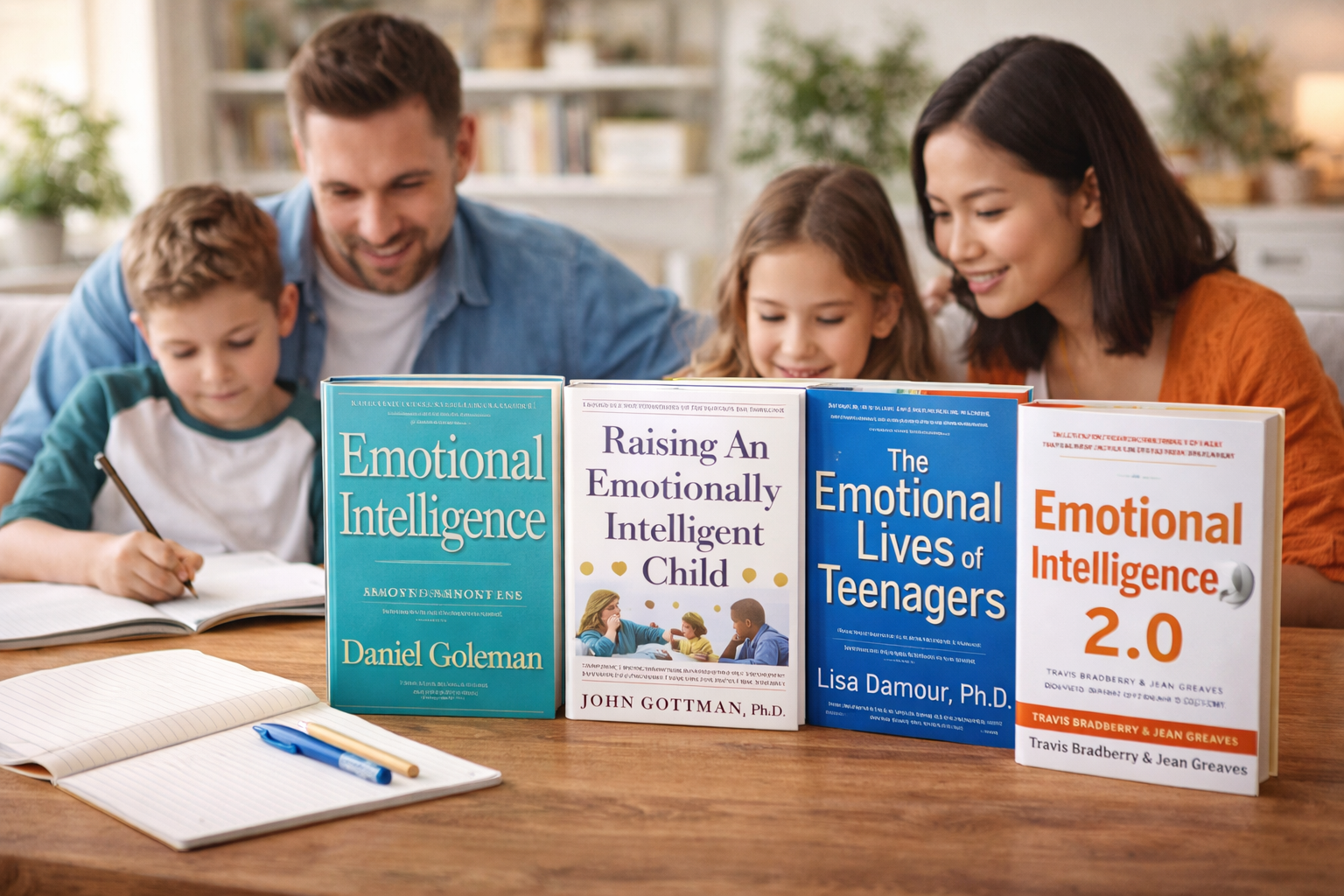
Books That Teach Emotional Intelligence
Books That Teach Emotional Intelligence
For the longest time, I thought understanding emotions was something that just… happened.
You feel something, you react to it, and that’s it.
Some people seemed naturally calm, understanding, and emotionally aware. Others—like me, at certain moments—felt overwhelmed, reactive, or unsure of what was really going on inside.
I didn’t think it was something you could learn.
But then, slowly, through reading, that belief started to change.
Not because a book told me what to feel.
But because it helped me understand how to feel—and more importantly, how to make sense of it.
The First Realization: Emotions Are Signals
One of the first ideas that stayed with me was simple, but powerful:
Emotions are not problems. They are signals.
Before that, I often treated emotions—especially uncomfortable ones—as something to avoid.
Stress, frustration, confusion… I would try to ignore them or push them away.
But some books approached emotions differently.
They suggested that every emotion carries information.
Not always obvious. Not always easy to understand.
But meaningful.
And once I started seeing emotions as signals instead of obstacles, something shifted.
I became more curious.
Instead of asking, “How do I get rid of this feeling?”
I started asking, “What is this trying to tell me?”
Learning to Pause Instead of React
One of the biggest challenges I had was reacting too quickly.
Something would happen, and I would respond almost instantly—without thinking, without processing.
And often, I would regret it later.
Books that focus on emotional intelligence often highlight something very simple:
The space between stimulus and response.
At first, that space felt almost nonexistent.
But reading helped me become aware of it.
And once you’re aware, you can begin to expand it.
Just a small pause.
A moment to breathe. To think. To understand what you’re actually feeling.
That pause changes everything.
Because it turns reaction into choice.
Understanding Yourself First
Many people think emotional intelligence is about understanding others.
And it is—but it starts with yourself.
Books that explore this idea often guide you inward.
They help you recognize patterns.
Why certain situations trigger you. Why some emotions feel stronger than others. Why you react the way you do.
At times, this process isn’t comfortable.
Because it requires honesty.
But it’s also where real growth begins.
Because once you understand yourself, you start to gain control—not over your emotions, but over how you respond to them.
Naming What You Feel
This might sound small, but it made a big difference for me.
Putting emotions into words.
Before, everything felt vague.
Just “bad,” “stressful,” or “annoying.”
But some books emphasized the importance of being specific.
Not just “I feel bad,” but:
- I feel frustrated
- I feel overwhelmed
- I feel uncertain
And once you name something clearly, it becomes easier to understand.
And once you understand it, it becomes easier to manage.
Reading expanded my emotional vocabulary—not in a technical way, but in a practical one.
It gave me language for things I used to feel but couldn’t explain.
Seeing Other People Differently
One of the most powerful effects of reading about emotional intelligence is how it changes the way you see others.
Before, it was easy to judge.
Someone reacts strongly—you think they’re overreacting. Someone is quiet—you assume they don’t care.
But books introduce a different perspective.
They remind you that everyone is dealing with something you can’t fully see.
Their reactions come from experiences, thoughts, and emotions you don’t always understand.
That realization builds empathy.
Not as a concept—but as a habit of thinking.
You start to ask:
What might they be feeling?
What could be behind this reaction?
And that changes the way you communicate, respond, and connect.
Emotional Intelligence Is Practice, Not Theory
Reading about emotions is one thing.
Applying it is another.
There were moments when I understood the idea—but still reacted the old way.
Still got frustrated. Still misunderstood situations.
And that’s where books helped in a different way.
They didn’t expect perfection.
They emphasized practice.
Small improvements.
Becoming slightly more aware. Slightly more patient. Slightly more thoughtful.
And over time, those small changes added up.
The Role of Reflection
One habit that reading encouraged was reflection.
After a conversation. After a reaction. After a moment that didn’t go the way I wanted.
Instead of moving on quickly, I started to think:
What happened?
What did I feel?
Why did I respond that way?
Not to criticize myself—but to understand.
And that understanding made future situations easier.
Because I wasn’t starting from zero anymore.
When Emotions Feel Overwhelming
There are still moments when emotions feel too strong.
Too fast. Too difficult to process in the moment.
And no book can completely remove that.
But what they can do is give you tools.
Ways to step back. To breathe. To recognize what’s happening instead of being fully controlled by it.
Even a small amount of awareness can make a difference.
Because it creates space.
And in that space, you can choose how to respond.
The Quiet Changes
Like many things, the impact of reading about emotional intelligence is subtle.
You don’t suddenly become perfectly calm or understanding.
But you notice small shifts.
You listen more. React less. Think before responding.
You become more patient—with others, and with yourself.
And those small changes affect your relationships, your decisions, your daily interactions.
In ways that are hard to measure—but easy to feel.
A Personal Reflection
Looking back, I don’t think I became emotionally intelligent because of one book.
It was many books.
Different perspectives. Different ideas. Different ways of explaining the same underlying truth:
Understanding emotions—your own and others’—is a skill.
And like any skill, it can be developed.
Slowly. Gradually. With practice.
And reading became one of the ways I practiced.
Final Thoughts
If you want to build emotional intelligence, books can guide you—but they won’t do the work for you.
They’ll help you notice.
Notice your thoughts. Your reactions. Your patterns.
They’ll give you language, perspective, and awareness.
But the real change happens in your everyday life.
In conversations. In moments of tension. In quiet reflections after the fact.
So read—not just to understand emotions, but to observe them.
In yourself. In others. In real situations.
Because emotional intelligence isn’t about controlling what you feel—
It’s about understanding it.
And once you begin to understand, you begin to respond differently.
And that difference, over time, changes everything.