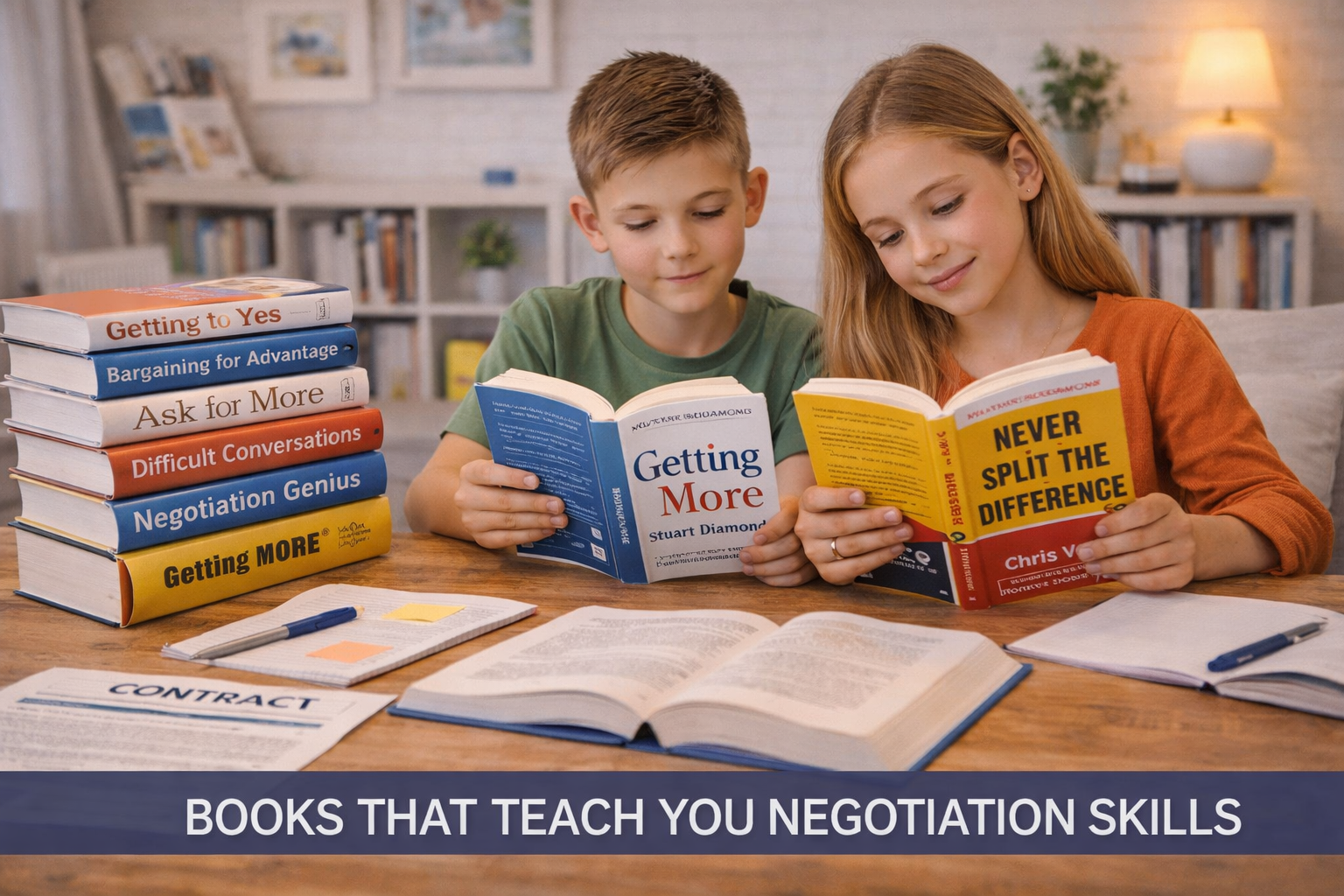
Books That Teach You Negotiation Skills
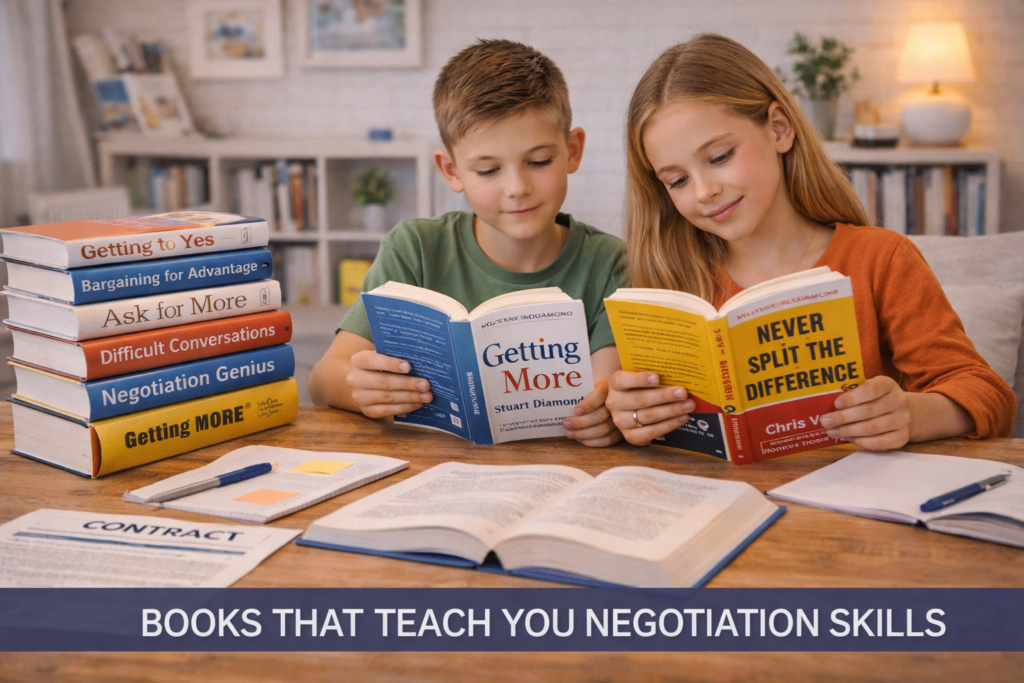
Books That Teach You Negotiation Skills
I used to think negotiation was something reserved for businesspeople.
People in suits. People closing deals. People sitting across tables, discussing numbers and contracts.
It felt distant from my everyday life.
I didn’t see myself as someone who needed negotiation skills.
But over time, I started noticing something I hadn’t paid attention to before:
Negotiation happens everywhere.
Not just in formal settings—but in conversations, decisions, and even small daily interactions.
And once I saw that, I started to pay attention.
The First Realization: Negotiation Is Not About Winning
The first idea that changed everything was simple:
Negotiation is not about winning.
Before, I thought it was.
Getting what you want. Convincing the other person. Coming out on top.
But books that explore negotiation often challenge that idea.
They show that effective negotiation is not about defeating the other side.
It’s about understanding.
Understanding what the other person wants, what they value, and what they’re willing to accept.
And once you understand that, the entire process changes.
Listening Becomes the Most Important Skill
One of the biggest shifts for me was realizing how important listening is.
Not passive listening.
Active listening.
Paying attention not just to words—but to tone, emotion, and what’s left unsaid.
Before, I focused on what I wanted to say.
How to respond. How to make my point.
But books taught me to reverse that.
To listen first.
And when you truly listen, you gain information.
And in negotiation, information is everything.
Asking the Right Questions
Another lesson that stood out:
Good negotiators ask good questions.
Not aggressive questions.
Not leading questions.
But open, thoughtful ones.
Questions that help you understand the other person’s perspective.
I started noticing how powerful that is.
Instead of assuming, you ask.
Instead of pushing, you explore.
And often, the answers reveal more than you expect.
Emotions Are Always Present
I used to think negotiation was purely logical.
Facts. Numbers. Reason.
But books showed me something different.
Emotions are always involved.
Even in situations that seem purely rational.
People care about being heard. Respected. Understood.
And if you ignore that, negotiation becomes difficult.
Understanding emotions—your own and others’—is not optional.
It’s essential.
Staying Calm Under Pressure
One thing I struggled with was staying calm.
In moments of tension, it’s easy to react.
To become defensive. To rush. To say things you don’t fully mean.
Books on negotiation often emphasize control.
Not control over the situation—but control over yourself.
Taking a moment. Pausing. Thinking before responding.
That small space can change the direction of a conversation.
Clarity Over Complexity
Another lesson:
Clear communication matters more than complicated arguments.
Before, I thought stronger arguments meant more words.
More explanations. More details.
But that often made things unclear.
Books taught me to simplify.
To express ideas clearly. Directly. Without unnecessary complexity.
And that made communication more effective.
Understanding What Matters
In any negotiation, not everything is equally important.
Some things matter more than others.
But before reading, I often treated everything the same.
Trying to get everything I wanted.
Books helped me see the importance of prioritization.
What are you willing to compromise on?
What is non-negotiable?
That clarity makes decisions easier.
The Power of Perspective
One of the most valuable skills in negotiation is seeing things from the other side.
Not just understanding—but genuinely considering their perspective.
Why do they want this? What are they concerned about? What are they trying to avoid?
Books helped me practice that.
And once you see both sides, you start to find solutions that work for both.
Silence Can Be Powerful
This was unexpected.
Sometimes, the most effective response is… silence.
Not reacting immediately. Not filling every gap with words.
Just pausing.
Giving space.
And that space often encourages the other person to speak more.
To reveal more.
To think more.
Negotiation in Everyday Life
The more I learned, the more I realized:
Negotiation is not limited to big situations.
It’s present in everyday life.
In conversations. In decisions. In how you communicate your needs.
And improving your negotiation skills improves all of those areas.
Practice Over Theory
Reading about negotiation is helpful.
But applying it is what matters.
There were times when I understood the concept—but didn’t apply it.
I reacted too quickly. Spoke too much. Didn’t listen enough.
But each experience became practice.
And over time, I improved.
Not perfectly—but noticeably.
A Personal Reflection
Looking back, I didn’t become skilled at negotiation overnight.
It happened gradually.
Through reading. Through observing. Through trying.
Each book added something.
A new idea. A different approach. A better understanding.
And over time, those pieces came together.
Final Thoughts
If you want to improve your negotiation skills, books can guide you—but they won’t do the work for you.
They’ll help you understand the principles.
The importance of listening, clarity, empathy, and awareness.
But real improvement comes from applying those ideas.
In conversations. In decisions. In everyday interactions.
Because negotiation isn’t just about getting what you want.
It’s about understanding, communicating, and finding solutions.
And once you start seeing it that way—
every conversation becomes an opportunity to practice.