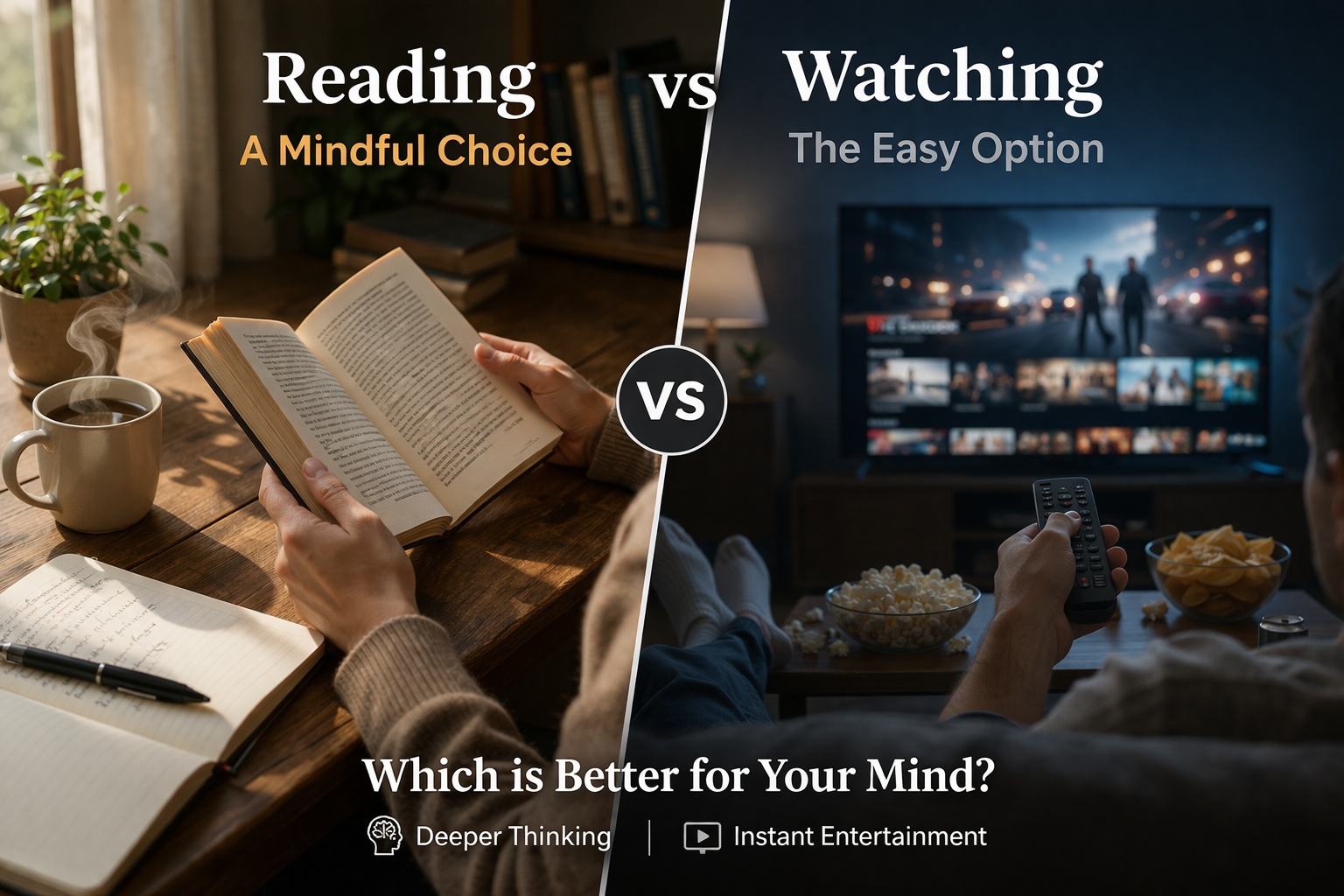
Reading vs Watching: Which is Better?
Reading vs Watching: Which is Better?
I used to think it was a simple question.
Reading or watching—just pick one. One must be better than the other, right? More useful. More productive. More “worth it.”
For a long time, I leaned toward watching. It was easier. Faster. After a long day, pressing play felt natural, almost automatic. Stories unfolded in front of me without effort. No need to imagine, no need to pause and think too deeply. Everything was already there—faces, voices, emotions, even the smallest details.
Reading, on the other hand, felt like work.
You had to sit still. Focus. Stay with the words long enough for them to mean something. And honestly, there were days when that felt like too much.
But over time, without really planning it, I found myself moving between the two—sometimes watching, sometimes reading. And somewhere in that back-and-forth, the question slowly changed.
It wasn’t just which is better?
It became what does each one do to the way I think, feel, and experience the world?
The Effort Behind Reading
The first thing I noticed about reading is that it asks more from you.
When you open a book, nothing is handed to you. There are no visuals, no background music guiding your emotions, no actors showing you exactly how a character feels.
It’s just words.
And somehow, from those words, your mind builds everything.
You imagine the setting. You hear the voices. You interpret the emotions. You decide how a moment feels.
At first, this effort can feel tiring. Your brain has to stay engaged. You can’t just drift off and still follow the story.
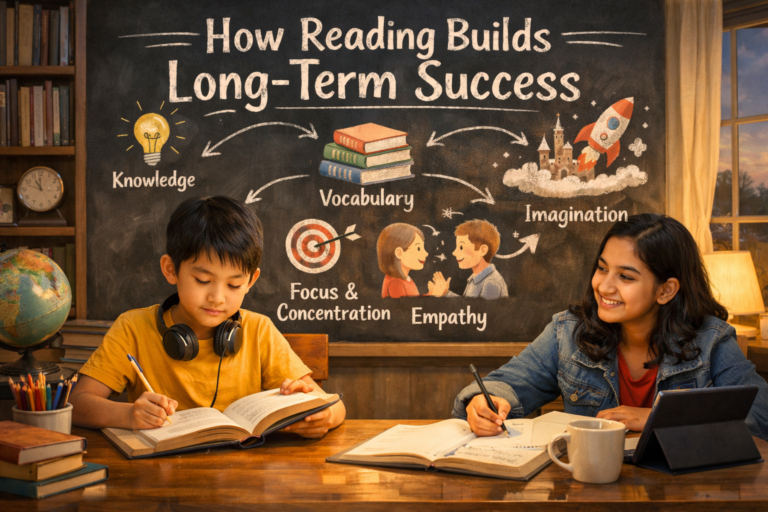
But that effort is exactly what makes reading powerful.
Because you’re not just consuming a story—you’re creating it in your mind.
And in doing so, your imagination becomes sharper. Your thinking becomes more active. You’re not just receiving information; you’re shaping it.
The Ease of Watching
Watching, in contrast, feels effortless.
You press play, and everything unfolds in front of you. The visuals are rich. The pacing is controlled. The emotions are guided by music, lighting, and performance.
It’s immersive in a different way.
There’s a certain comfort in that.
After a long day, when your energy is low, watching doesn’t demand much. You can sit back, relax, and still feel entertained, moved, or even inspired.
And that’s not a bad thing.
In fact, watching can sometimes deliver emotional impact faster than reading. A single scene, acted well, can make you feel something instantly—without needing pages of buildup.
It’s direct. Immediate. Powerful in its own way.
Depth vs Speed
As I spent more time with both, one difference became clearer: reading tends to go deeper, while watching tends to move faster.
A book can spend pages exploring a single thought, a single feeling, a single moment.
It can take you inside a character’s mind in a way that feels intimate and detailed. You understand not just what they do, but why they do it.
Watching, on the other hand, often has to move more quickly. Even the best films and shows are limited by time. They show you what happens, but they don’t always have the space to explore every layer beneath it.
That doesn’t make one better—it just makes them different.
Sometimes you want depth. Sometimes you want speed.
The real question is: what do you need in that moment?
How Each One Shapes Your Thinking
This is where things started to shift for me.
Reading didn’t just give me stories—it changed how I think.
It made me more patient with complex ideas. It trained me to follow long arguments, to hold multiple thoughts in my mind, to sit with something without needing immediate clarity.
It also made me more reflective.
When you read, there are natural pauses. Moments where you stop, think, reread, or just let an idea settle. Those pauses matter. They give your brain time to process, to connect, to question.
Watching rarely offers that space—unless you intentionally create it.
It’s continuous. One scene flows into the next. If you’re not careful, you can go through an entire story without ever stopping to think about what it meant.
That’s when I realized: it’s not just about the content—it’s about the pace at which your mind engages with it.
Emotional Connection: Different, Not Better
I used to believe that reading created a deeper emotional connection.
But over time, I realized it’s not that simple.
Reading builds emotion slowly. It grows over time, through thoughts, internal dialogue, and subtle details.
Watching can hit you all at once. A single performance, a single moment, can leave a strong emotional impact.
I’ve cried over books. I’ve also been deeply moved by films.
The difference isn’t in how much you feel—it’s in how you feel it.
Reading feels like a quiet, steady connection.
Watching feels like a wave.
Both are real. Both matter.
Attention in a Distracted World
One of the biggest differences, though, shows up in how each one affects your attention.
Watching—especially short, fast-paced content—can make your brain привык to constant stimulation. Quick cuts, instant gratification, immediate engagement.
Reading does the opposite.
It slows you down. It asks for sustained attention. It rewards patience.
And in a world where distractions are everywhere, that ability to focus is becoming more valuable.
I started noticing that the more I read, the easier it became to concentrate—not just on books, but on everything else.
The more I watched, especially mindlessly, the harder it became to sit with something that required effort.
That contrast was hard to ignore.
It’s Not a Competition
For a long time, I kept trying to choose.
Reading or watching. Which one should I prioritize? Which one is “better”?
But eventually, I realized that question was limiting.
Because the truth is, they serve different purposes.
Reading is where I go when I want to think deeply, reflect, and slow down.
Watching is where I go when I want to relax, experience something visually, or simply rest my mind.
One builds. The other balances.
And when used intentionally, they complement each other.
A Personal Shift
These days, I still watch. I still enjoy films, shows, and videos.
But I’m more aware of how I use them.
I don’t rely on them the same way I used to. They’re no longer my default.
Reading has taken that place.
Not because it’s superior—but because of what it gives me.
Clarity. Focus. Depth. Space to think.
And maybe most importantly, a sense that I’m actively engaging with something, rather than just letting it pass in front of me.
So… Which Is Better?
If you’re looking for a simple answer, you might be disappointed.
Because there isn’t one.
Reading isn’t automatically better than watching. Watching isn’t automatically worse than reading.
It depends on what you’re looking for.
If you want to challenge your mind, expand your thinking, and build focus—reading has a clear advantage.
If you want to relax, unwind, or experience something quickly and vividly—watching does that well.
The key is not to choose one and reject the other.
It’s to be intentional.
Final Thoughts
The question isn’t really reading vs watching.
It’s about how you spend your attention.
Because your attention shapes your thinking. And your thinking shapes your life.
So maybe the better question is:
What do I want my mind to become?
Once you have that answer, the choice becomes much clearer.
And sometimes, the best balance isn’t choosing one over the other—
—but knowing when to open a book, and when to press play.