
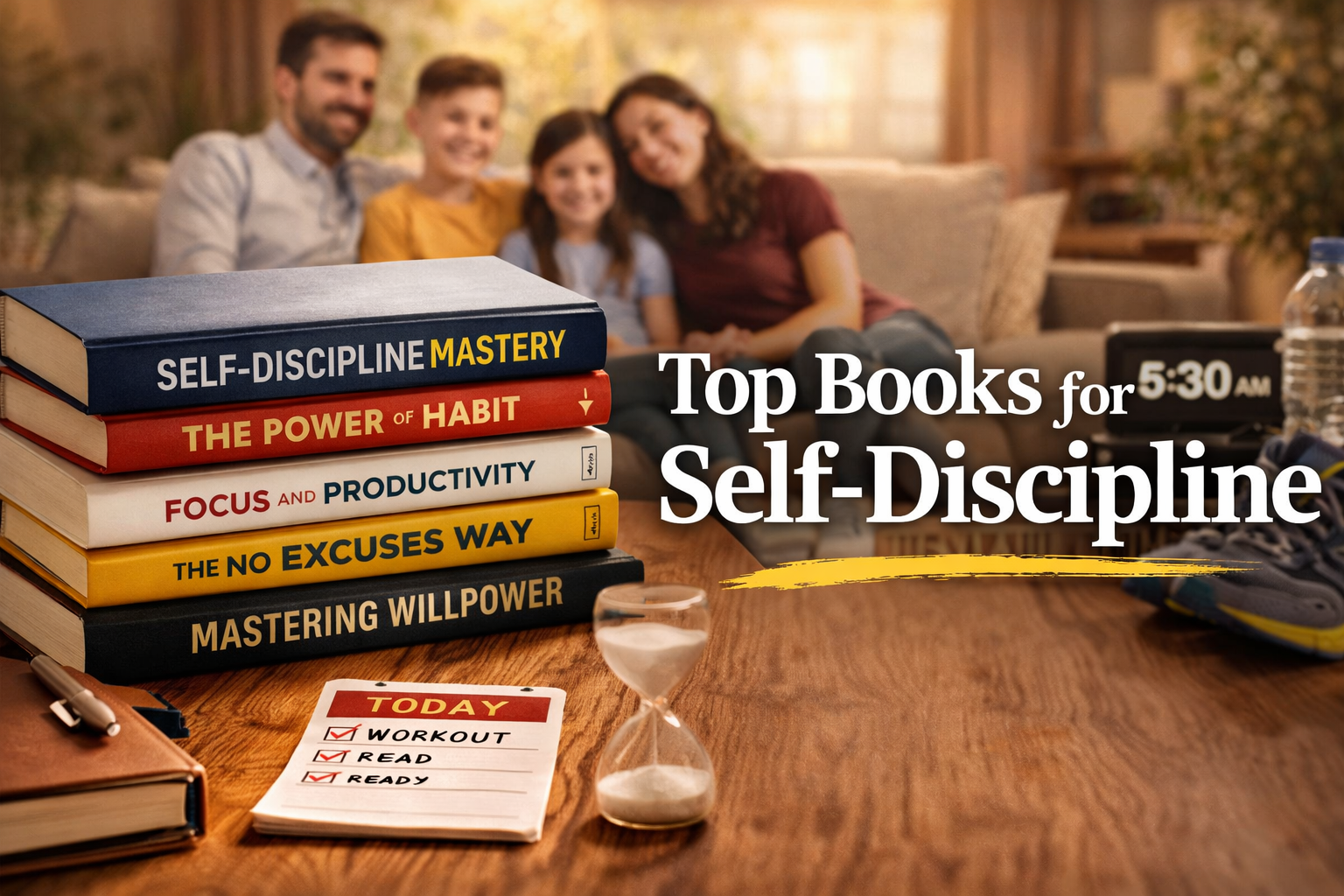
Top Books for Self-Discipline
Top Books for Self-Discipline
I used to think self-discipline was something harsh.
Something rigid. Strict. Almost cold.
It felt like waking up at 5 a.m. every day, following a perfect routine, never getting distracted, never losing focus. It felt like a life with no room for mistakes.
And honestly, that version of discipline didn’t appeal to me.
It felt exhausting—like something I could try for a few days, maybe a week, but never something I could sustain.
But then, I started reading.
Not with the goal of becoming more disciplined, but simply out of curiosity. And somewhere between the pages of different books—some about habits, some about mindset, some not even related to discipline at all—my understanding began to change.
Slowly, quietly, and in a way I didn’t expect.
The First Realization: Discipline Isn’t About Force
One of the first ideas that stayed with me came from a book that didn’t shout instructions or demand perfection.
Instead, it suggested something simple:
Discipline isn’t about forcing yourself.
It’s about reducing resistance.
That idea felt almost too easy. But the more I thought about it, the more it made sense.
Every time I failed to stay consistent, it wasn’t because I didn’t care. It was because things felt too hard to start.
Books that focus on small habits—like Atomic Habits by James Clear—helped me see this clearly.
They didn’t tell me to become a different person overnight. They showed me how small changes—tiny, almost invisible actions—could build momentum over time.
And that’s when discipline stopped feeling like punishment.
It started feeling like design.
Books That Changed How I See Effort
Another shift came from books that explored effort differently.
Before, I believed that discipline meant pushing yourself constantly. No breaks. No excuses.
But some books challenged that idea.
They talked about energy. About focus. About understanding your limits instead of ignoring them.
Books like Deep Work by Cal Newport made me realize that discipline isn’t just about doing more—it’s about doing things better, with intention.
It’s about protecting your attention. Choosing what matters. Letting go of distractions that don’t.
That kind of discipline feels different.
It’s quieter. Smarter. More sustainable.
The Power of Consistency Over Intensity
If there’s one lesson that kept appearing across different books, it’s this:
Consistency matters more than intensity.
At first, I resisted this idea.
It felt too slow. Too simple. I wanted results faster. I wanted big changes.
But every book seemed to point back to the same truth:
Small actions, repeated daily, matter more than occasional bursts of effort.
That idea showed up again in books like The 7 Habits of Highly Effective People and The Slight Edge.
And over time, I started to see it in my own life.
The days when I did a little—just a little—were the ones that added up.
The days when I tried to do everything at once usually led to burnout.
Discipline, I realized, isn’t about doing everything.
It’s about doing something, consistently.
Learning from Stories, Not Just Advice
Interestingly, not all the books that helped me were “discipline books.”
Some were stories.
Biographies. Novels. Personal journeys.
And in those stories, I saw discipline in a different light.
Not as a set of rules—but as a choice, made over and over again.
I read about people who failed, doubted themselves, struggled—and still kept going.
Not perfectly. Not effortlessly.
But persistently.
And that kind of discipline felt more real than any checklist.
Because it included mistakes. It allowed setbacks. It acknowledged that progress isn’t always linear.
Discipline and Identity
One idea that truly changed the way I approach discipline came from a simple question:
Who are you becoming?
Some books emphasized identity over outcomes.
Instead of focusing on what you want to achieve, they encouraged you to focus on who you want to be.
Not “I want to read more,” but “I am a reader.”
Not “I want to be disciplined,” but “I am someone who shows up.”
At first, this felt like just a shift in wording.
But it wasn’t.
Because when you see yourself differently, your actions begin to follow.
You don’t rely on motivation as much. You act in alignment with your identity.
And slowly, discipline becomes less about effort—and more about consistency with who you believe you are.
The Role of Environment
Another lesson that came up again and again:
Your environment shapes your discipline more than your willpower.
Before, I thought discipline meant resisting distractions.
But some books made me question that.
Why rely on resistance… when you can remove the distraction entirely?
Why depend on willpower… when you can design your surroundings to make good choices easier?
This was a game changer.
Moving my phone away while working. Keeping a book nearby. Creating spaces that supported focus instead of breaking it.
These small changes reduced the need for constant self-control.
And suddenly, discipline felt lighter.
When Discipline Feels Hard
Even with all these insights, there were still days when discipline felt difficult.
Days when I didn’t want to follow through. Days when I felt tired, distracted, or unmotivated.
And that’s where books helped in a different way.
Not by giving me new strategies—but by reminding me:
It’s normal.
Every person who builds discipline struggles with it.
There’s no point where it becomes effortless all the time.
But what matters is not whether it feels easy.
It’s whether you continue anyway.
A Different Definition of Discipline
If I had to redefine discipline now, based on everything I’ve read and experienced, it wouldn’t sound strict or harsh.
It would sound like this:
Discipline is showing up, even when it’s inconvenient.
It’s choosing long-term growth over short-term comfort.
It’s making small decisions that align with the person you want to become.
It’s not perfect.
It’s not extreme.
It’s consistent.
The Books That Stay With You
Some books fade after you finish them.
Others stay.
Not because they were dramatic or overwhelming—but because they changed how you think.
The books that helped me build discipline didn’t give me a rigid system.
They gave me perspective.
They helped me understand that discipline isn’t about control—it’s about direction.
Not about forcing yourself—but about guiding yourself.
And that difference matters more than I expected.
A Personal Reflection
Looking back, I didn’t become disciplined overnight.
There was no single book that transformed everything.
But each book added something.
A new idea. A small shift. A better understanding.
And over time, those pieces came together.
I became more consistent. More intentional. More aware of how I spend my time and energy.
Not perfect. But better.
And that’s enough.
Final Thoughts
If you’re searching for self-discipline, books can help—but not by giving you a quick fix.
They won’t make things instantly easy.
What they will do is change how you see discipline.
They’ll show you that it’s not about being strict or extreme.
It’s about being consistent, aware, and intentional.
So don’t just look for motivation.
Look for understanding.
Pick up a book. Read slowly. Reflect on what stays with you.
And let those small ideas shape your actions—one day at a time.
Because in the end, discipline isn’t something you force.
It’s something you build.
Quietly. Gradually.
And once it becomes part of who you are—
you don’t have to chase it anymore.