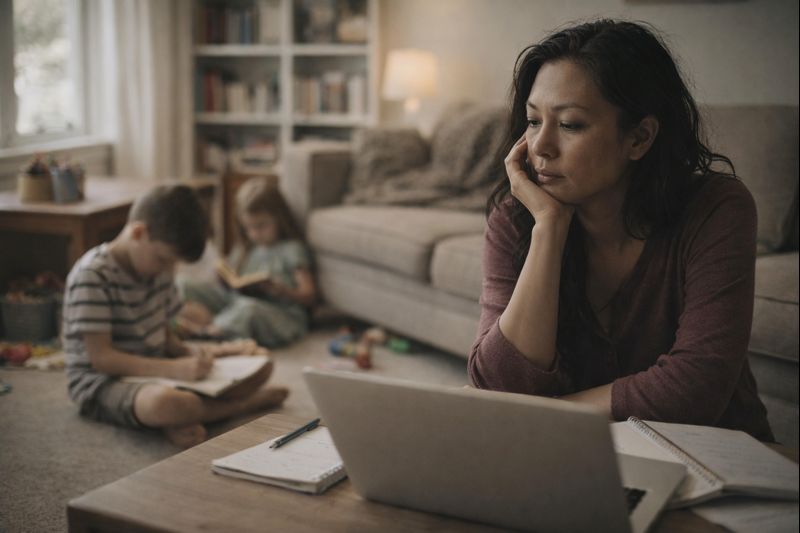
Many homeschooling parents hesitate to use the word lonely.
After all, you’re rarely alone.
Your child is with you all day.
Sometimes more than one child.
Sometimes other adults, family members, or communities nearby.
So when loneliness creeps in, it feels confusing — even shameful.
“How can I feel lonely when I’m never by myself?”
But the loneliness homeschooling parents experience is not about physical absence.
It’s about something much quieter — and much harder to name.
This loneliness isn’t about being alone — it’s about being unseen
Homeschooling loneliness doesn’t come from lack of company.
It comes from lack of being met.
You may be surrounded by people who need you.
People you are attuned to.
People you are caring for.
But very few people are attuned to you.
And over time, that imbalance creates a deep sense of isolation — even in a full house.
You are constantly present — but rarely accompanied
Homeschooling parents spend most of their days in relationship.
They are listening.
Responding.
Anticipating.
Adjusting.
But being in relationship doesn’t automatically mean being accompanied.
Accompaniment requires:
- Shared responsibility
- Emotional reciprocity
- Someone holding part of the weight with you
Most homeschooling parents are present for others —
but alone in holding the role.
Why companionship doesn’t relieve this kind of loneliness
You might talk to other parents.
Join groups.
Attend meetups.
Share ideas and resources.
And still feel lonely.
Because this loneliness isn’t about conversation.
It’s about carrying something no one else is carrying with you.
You can exchange tips —
but the responsibility still points back to you.
You can vent briefly —
but you’re still the one making the decisions afterward.
So the loneliness persists.
The loneliness of being the final decision-maker
One of the deepest sources of isolation in homeschooling is this:
You are the final authority.
There is no one else who:
- Signs off on your choices
- Absorbs the consequences
- Shares the final responsibility
Even when others support you emotionally,
the decisions still rest on your shoulders.
And being the final decision-maker is lonely —
especially when the stakes involve someone you love.
Why you may hesitate to talk about this loneliness
Many homeschooling parents feel they shouldn’t feel lonely.
They chose this.
They wanted closeness.
They wanted more time together.
So when loneliness appears, it feels like a contradiction.
“If I admit this, does it mean I made the wrong choice?”
Or worse:
“Does this mean I’m ungrateful?”
So the loneliness goes underground.
Unspoken loneliness doesn’t disappear.
It just turns inward.
Loneliness grows when you have no peers inside the role
In many jobs or roles, there are peers.
People who:
- Share the same responsibilities
- Understand the same pressures
- Normalize the same struggles
Homeschooling parents often lack true peers.
Other parents may:
- Parent differently
- Delegate education elsewhere
- Carry responsibility in different ways
Even within homeschooling communities, experiences vary widely.
So when you struggle, you may feel:
“No one else is doing this the way I am.”
And isolation deepens.
Emotional labor without witness creates quiet loneliness
Much of what homeschooling parents do is emotional labor.
You regulate emotions.
Hold space.
De-escalate.
Reassure.
Absorb stress.
And emotional labor becomes lonely when it goes unwitnessed.
Not criticized.
Not judged.
Just… unseen.
When no one reflects back:
“That’s a lot to carry.”
The mind starts to feel invisible.
You may feel lonely even in supportive relationships
This can be one of the most confusing parts.
You may have:
- A loving partner
- Supportive friends
- A helpful community
And still feel lonely.
Because support doesn’t always equal shared experience.
If others don’t live inside the same responsibility,
they can care — but they can’t fully accompany.
And that gap matters.
Loneliness increases when you can’t speak freely
Many homeschooling parents censor themselves.
They avoid saying things like:
- “I regret parts of this.”
- “I feel trapped sometimes.”
- “I’m scared about the future.”
Because those thoughts feel dangerous.
Disloyal.
Unacceptable.
So conversations stay surface-level.
And surface-level connection doesn’t reach loneliness.
This loneliness is not a personal failure
It’s important to say this clearly:
Feeling lonely does not mean you’re antisocial.
Or ungrateful.
Or emotionally needy.
It means:
- You are carrying a role with no shared container
- You are responsible without relief
- You are emotionally present without equal return
That combination creates loneliness —
no matter how many people are around you.
Loneliness is intensified by long-term responsibility
Short-term stress can be shared.
Long-term responsibility isolates.
Homeschooling isn’t a phase you can easily “get through.”
It’s ongoing.
Evolving.
Open-ended.
And long-term responsibility, when carried alone,
creates a quiet sense of separation from others.
You start to feel like you’re living in a different mental world.
Why loneliness often shows up as irritability or numbness
Many parents don’t recognize loneliness directly.
Instead, it shows up as:
- Irritation
- Withdrawal
- Emotional flatness
- Feeling disconnected
Because loneliness doesn’t always feel like sadness.
Sometimes it feels like nothing.
And numbness is often a response to carrying too much alone for too long.
You don’t need to fix loneliness to acknowledge it
Many parents hear “loneliness” and immediately think:
“I need to solve this.”
But loneliness doesn’t need to be fixed right away.
It needs to be recognized.
When you stop arguing with it,
it often softens.
Because loneliness is not asking for solutions —
it’s asking for acknowledgment.
You are not lonely because homeschooling is wrong
This matters:
You are not lonely because you made a mistake.
You are lonely because:
- Responsibility is concentrated
- Emotional labor is constant
- Validation is scarce
- Support is limited
Loneliness is a response to structure —
not a verdict on your choice.
Before you move on
If homeschooling has felt lonely in ways you can’t quite explain, pause here.
You don’t need to compare yourself to others.
You don’t need to be more grateful.
You don’t need to “reframe” the feeling.
You only need to recognize:
“This loneliness makes sense.”
Sometimes, that recognition alone
is enough to make the isolation feel less absolute.
You are not alone in feeling this —
even when it feels like you are.
