Why Reading Is the Ultimate Skill
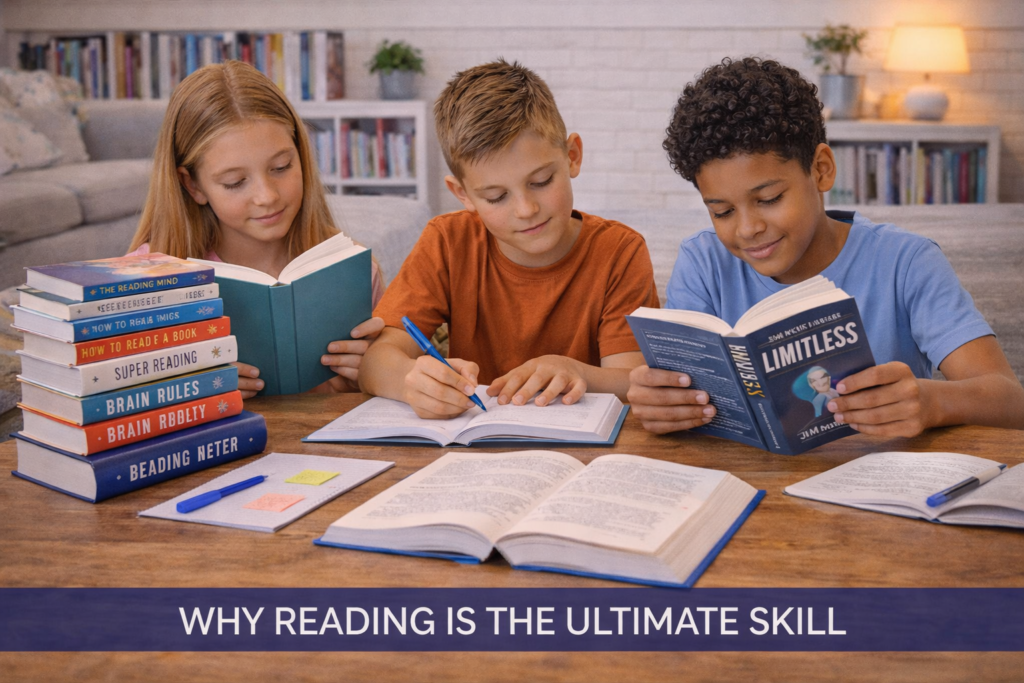
Why Reading Is the Ultimate Skill
I used to think skills were something specific.
Coding. Writing. Speaking. Designing.
Each one had a clear purpose. A clear application. A clear outcome.
Reading didn’t feel like that.
It felt basic.
Something you learn early, something you use often—but not something you develop in the same way.
At least, that’s what I thought.
Until I started noticing something.
Every skill I tried to improve—every area I wanted to grow in—somehow led me back to reading.
The Skill Behind All Skills
At first, it didn’t make sense.
Why would reading matter so much?
But over time, the pattern became clear.
If you want to learn something new, you read.
If you want to understand something deeply, you read.
If you want to improve how you think, communicate, or solve problems—you read.
Reading isn’t just a skill.
It’s the skill that supports all others.
Learning Becomes Faster
One of the first things I noticed was how reading affected learning.
Before, learning felt slow.
I would struggle to understand concepts, rely on limited sources, and often feel stuck.
But as I read more, something changed.
I could grasp ideas faster.
Not because the ideas became easier—but because my ability to process them improved.
Reading trained my brain to follow complex thoughts.
And once you can do that, learning becomes more efficient.
You Start Thinking Differently
Reading doesn’t just give you information.
It changes how you think.
At first, I didn’t notice it.
But over time, my thoughts became more structured.
More organized.
I could connect ideas more easily. See patterns. Understand relationships between concepts.
And that made a difference—not just in reading, but in everything else.
Communication Improves Naturally
Another unexpected benefit was communication.
I didn’t actively try to improve it.
But the more I read, the easier it became to express ideas.
Not because I memorized anything—but because I had seen how ideas are communicated.
How sentences flow. How arguments are built. How clarity is created.
And that naturally showed up in how I spoke and wrote.
Reading Builds Focus
In a world full of distractions, focus is becoming rare.
And reading trains it.
Every time you sit with a book, you’re practicing attention.
Staying with one idea. Following it through.
And that practice strengthens your ability to focus.
Not just while reading—but in everything else you do.
It Expands Your Perspective
Before reading consistently, my perspective was limited.
Shaped mostly by my own experiences.
But books introduced me to different viewpoints.
Different ways of thinking. Different ways of living.
And that expanded how I saw the world.
Not in a dramatic way—but in a gradual, meaningful one.
You Learn Without Direct Experience
One of the most powerful aspects of reading is this:
You can learn from experiences that aren’t your own.
Mistakes. Successes. Ideas from people you’ll never meet.
And that saves time.
Because you don’t have to learn everything the hard way.
You can learn through others.
Reading Builds Discipline
At first, reading requires effort.
You have to choose it.
Show up for it.
But over time, it builds discipline.
Because it becomes something you do consistently.
And that discipline extends beyond reading.
The Compounding Effect
Reading has a compounding effect.
Each book adds something.
A new idea. A different perspective. A deeper understanding.
And over time, those additions build.
Not all at once—but steadily.
Until you realize you’re thinking differently than you used to.
It Helps You Make Better Decisions
The more you read, the more information and perspectives you have.
And that affects your decisions.
You consider more factors. See more possibilities.
You become less reactive—and more thoughtful.
And that leads to better choices.
Reading Is Always Available
One thing I didn’t appreciate before is how accessible reading is.
You don’t need special conditions.
Just time and attention.
And yet, it offers so much in return.
It Grows With You
What makes reading unique is that it grows with you.
The same book can mean different things at different times.
As you change, your understanding changes.
And that keeps reading relevant.
No matter where you are.
A Personal Reflection
Looking back, I didn’t see reading as important at first.
But over time, I realized it was shaping everything.
How I think. How I learn. How I communicate.
Not in a dramatic way.
But in a consistent, reliable way.
Final Thoughts
If you’re looking for the most valuable skill you can develop, reading is a strong candidate.
Not because it’s impressive.
But because it supports everything else.
It improves how you think, learn, communicate, and understand the world.
And it does all of that quietly.
Without pressure.
Without complexity.
Just through consistent practice.
So if you want to improve—not just in one area, but in many—
start with reading.
Because it’s not just a skill you use.
It’s a skill that improves all the others.